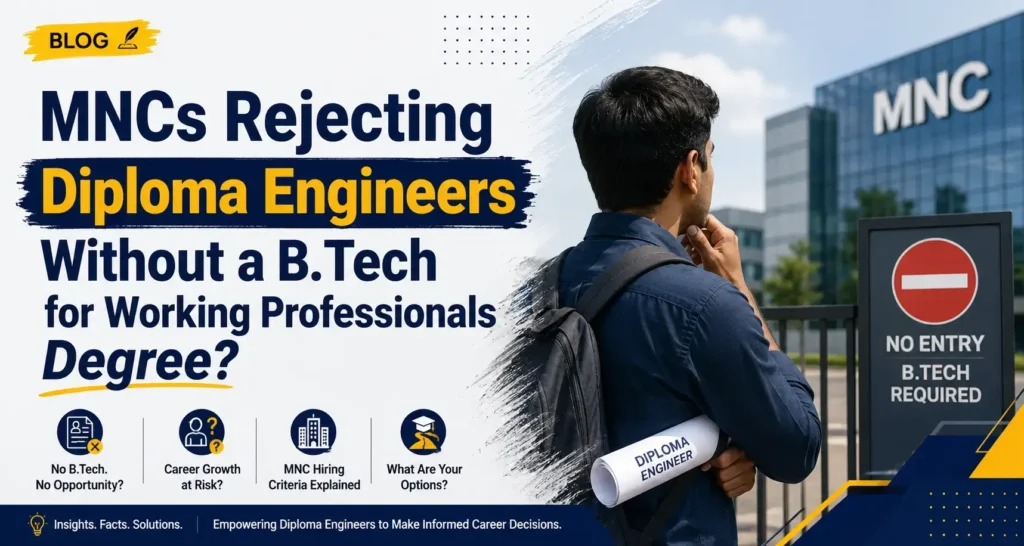

That’s the part nobody tells you. You can survive factory noise. Night shifts. Site pressure. Managers who think “urgent” is a personality trait. Fine. People do it every day.
But one missing degree? Suddenly, the same company that trusted you with production targets worth crores starts acting like you’re an intern who just discovered what a screwdriver does.
Brutal. Slightly insulting too. I remember speaking to a diploma holder from Noida who’d been working in maintenance for years. Smart guy. Knew machines better than the engineers who carried laptops around pretending to “monitor operations.” His words, not mine. Though honestly… fair. Anyway, he applied internally for a promotion. Experience? Solid. Team handling? Done. Technical knowledge? Better than half the department.
Rejected. Reason?
“No B.Tech.” That one line has probably ruined more working professionals’ confidence than engineering mathematics ever did. And that’s exactly why the demand for a B.Tech for Working Professionals program has exploded quietly while everyone else is busy debating AI and startup funding on LinkedIn.
Because working engineers are tired of being professionally invisible.
The Weird Problem Nobody Prepared Diploma Holders For
Here’s the funny thing. When you’re doing a diploma, everyone says: “Experience matters more than a degree.” Cute motivational line. Sounds fantastic printed on a flex banner near the college gate.
Then reality enters like a villain with Excel sheets. Suddenly:
- Promotions need eligibility,
- MNCs need graduation criteria,
- Government tenders need qualification proof.
- and HR software rejects resumes before humans even see them.
That’s where people start searching for options like a B.Tech Part-time Program at 1:14 AM after shift duty while eating cold samosas from the canteen. Not because they’re “passionate learners.”
Because they’re stuck. There’s a difference.
Why Regular B.Tech Sounds Great Until Rent Is Due
Technically, yes, you could quit your job and join a regular engineering college again. And technically, I could also become a professional drummer tomorrow. Both ideas collapse around Day 4.
Working professionals have responsibilities now:
- rent,
- EMIs,
- family pressure,
- younger siblings’ fees,
- and bosses who somehow call during dinner every single time.
Leaving a stable job for full-time college sounds inspiring only in advertisements where everyone carries backpacks and laughs for no reason. Real life? Different movie entirely.
That’s why the B.Tech for Working Professionals route exists in the first place. Not as a shortcut. As survival.
So What Exactly Is This Program?
This is where confusion starts. Fast.
People hear terms like:
- B.Tech Part-time Program,
- evening engineering,
- hybrid B.Tech,
- flexible engineering degree,
And assume everything means the same thing.
Nope. Some programs are structured specifically for diploma holders and employed professionals. Classes are scheduled around work timings. Labs happen in practical formats. Many universities offer lateral entry directly into the second year.
Meaning? You don’t restart life from scratch like some engineering reboot sequel nobody asked for.
One production supervisor I spoke with attended weekend classes after six-day shifts. Exhausting? Absolutely. Worth it?
The guy switched companies within a year and nearly doubled his salary package. Not magic. Just qualification finally catching up to skill.
The Biggest Misunderstanding About a B.Tech Part-time Program
People think flexibility means “easy.” That’s adorable.
A proper B.Tech for Working Professionals course is actually harder in some ways because your brain is constantly juggling:
- work deadlines,
- attendance,
- practicals,
- assignments,
- and adult exhaustion.
You’re not studying between FIFA matches in hostel rooms anymore. You’re studying after 10-hour shifts while your phone battery dies beside you and somebody in the neighborhood starts drilling walls at midnight for reasons known only to God.
Still, working professionals continue doing it. Why? Because career stagnation feels worse.
Who Usually Applies?
Not toppers. That’s the interesting part.
Most applicants are practical people. Diploma holders. Working technicians. Site engineers. Manufacturing staff. Maintenance teams. Shift supervisors. QA executives. People who already understand real machines, real operations, and real workplace chaos.
One guy I remember was working in HVAC maintenance during the day and attending classes on weekends. Said he’d spent years training fresh graduates who later became his seniors because they had degrees. That sentence stayed with me longer than expected.
Because honestly? That’s the frustration behind most searches for B.Tech for Working Professionals programs.
Not ego. Just wanting the system to finally count the experience they already earned.
Does Industry Actually Respect This Route?
Short answer? Yes. If the university and structure are legitimate.
No company cares whether you studied while sitting under a classroom fan at 2 PM or after work wearing safety shoes and carrying a lunchbox. They care about:
- recognition,
- eligibility,
- technical capability,
- and whether the degree is valid.
That’s why choosing the right university matters more than flashy advertising with stock-photo students smiling at laptops. A wrong choice here can waste years.
And trust me, nothing hurts more than realizing your “career upgrade” turned into a PDF certificate HR quietly ignores.
Universities People Usually Consider
A few universities regularly come up when working professionals explore this path:
- Lingaya’s Vidyapeeth
- Sanskriti University
- Kalinga University
- Shri Venkateshwara University
Each has different structures, schedules, support systems, and specialization options. And honestly? Most diploma holders don’t even know what questions they should ask before applying. They just want someone to explain things normally instead of throwing admission brochures at their face like confetti.
The Silent Mental Shift Nobody Talks About
Something strange happens when working professionals return to studying. Confidence changes. Slowly.
Not motivational-speaker confidence. Relax. Nobody starts posting sunrise quotes on Instagram. But practical confidence. Meetings feel different. Interviews feel less intimidating. Internal promotions suddenly become possible. Conversations with management change tone.
A degree doesn’t magically increase intelligence overnight. But it changes access. And access changes careers. That’s the real story behind the rise of B.Tech for Working Professionals programs across India.
Avoiding the Usual Mistakes
This part matters more than people think. Every year, diploma holders rush into random programs after seeing words like:
“Fast-track,” “100% online,” or “direct engineering degree.”
Half the time nobody even explains recognition properly. Bad idea.
A little research now saves massive regret later. That’s also why platforms like College Vidya are becoming useful for working professionals trying to compare universities without getting trapped in aggressive sales calls five minutes after filling a form. The unbiased comparison part genuinely helps when every institute claims to be “India’s No.1” for absolutely no reason.
Conclusion
A B.Tech for Working Professionals program is not some magical shortcut where life suddenly becomes perfect after one semester. You’ll still work long shifts. Still feel tired. Still question your decisions during exam season. But you stop standing still.
And honestly, for most diploma holders, that’s the real goal. Forward motion.
Not motivational speeches. Not fake promises. Just a fair shot at the opportunities that were already supposed to be yours.